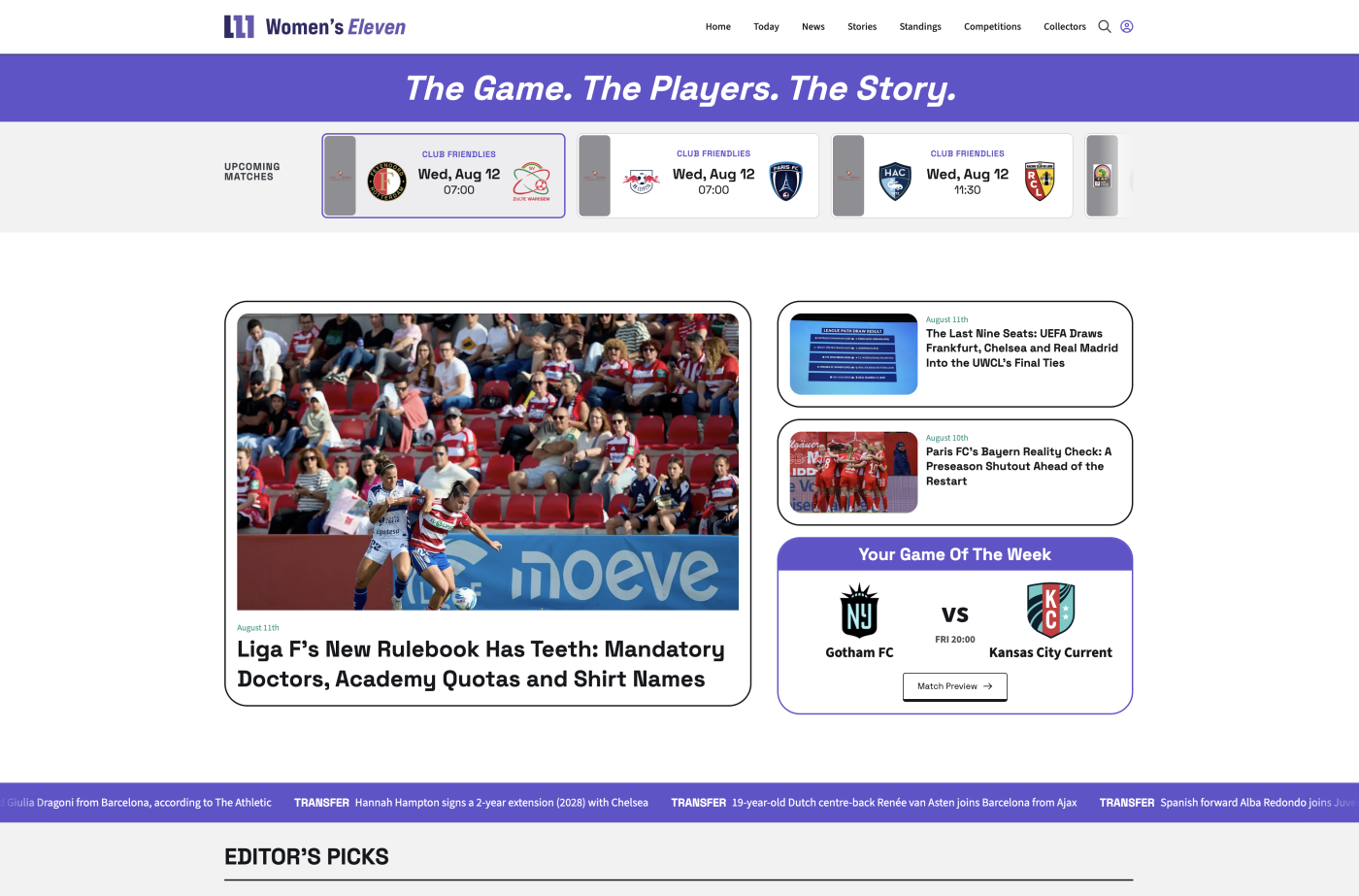
Women's Eleven is a live platform for women's football: editorial coverage, fixtures and standings across 30+ competitions, and a trading-card value tracker. I design it, build it and ship it, from the SCSS through the data pipeline to the iOS app.
Context
Women's football is growing faster than the products built to follow it. Coverage is scattered across general sports sites where the women's game is a subsection, results and tables are often incomplete, and the fan who wants both the story and the data has to go to several places to get it. Women's Eleven is my answer: a single place for the reporting, the numbers and the collecting, built specifically for this sport rather than adapted from the men's game.
Challenge
- One person covering every discipline: product design, UI, front-end, back-end, database, data pipeline and a mobile app.
- Three audiences with genuinely different needs, sharing one interface: readers who come for the story, fans who come for scores and tables, and collectors who come for card values.
- Sports data has to be right and current. Fixtures, lineups and standings change daily across dozens of competitions, and nobody is checking the feed but me.
- The same content has to serve a server-rendered website and a native app without maintaining two versions of the truth.
Approach
- Design system first – Built the interface as modular SCSS and Twig components so new sections could be assembled rather than redrawn. The same discipline I bring to client design systems, applied to my own product.
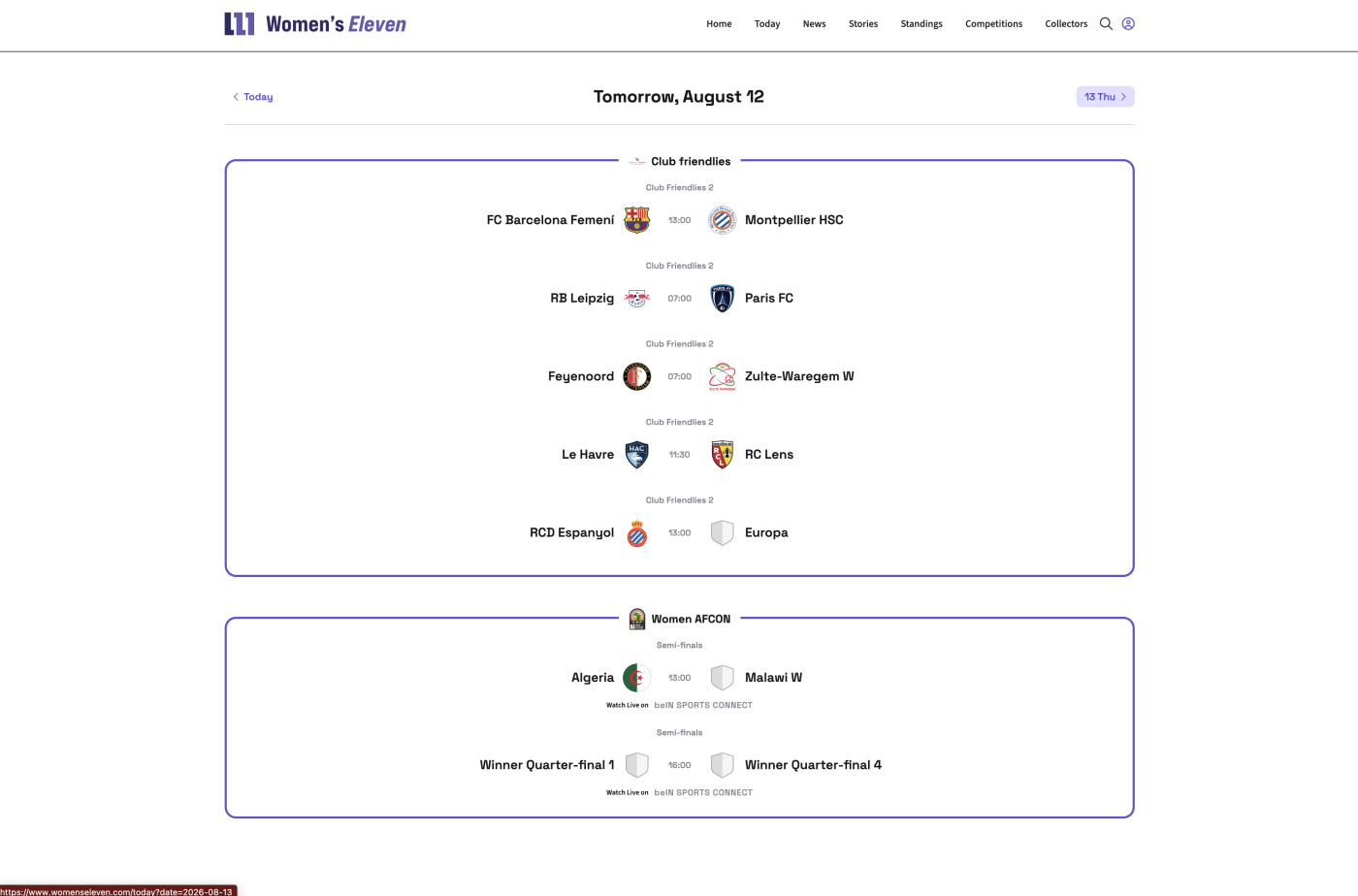
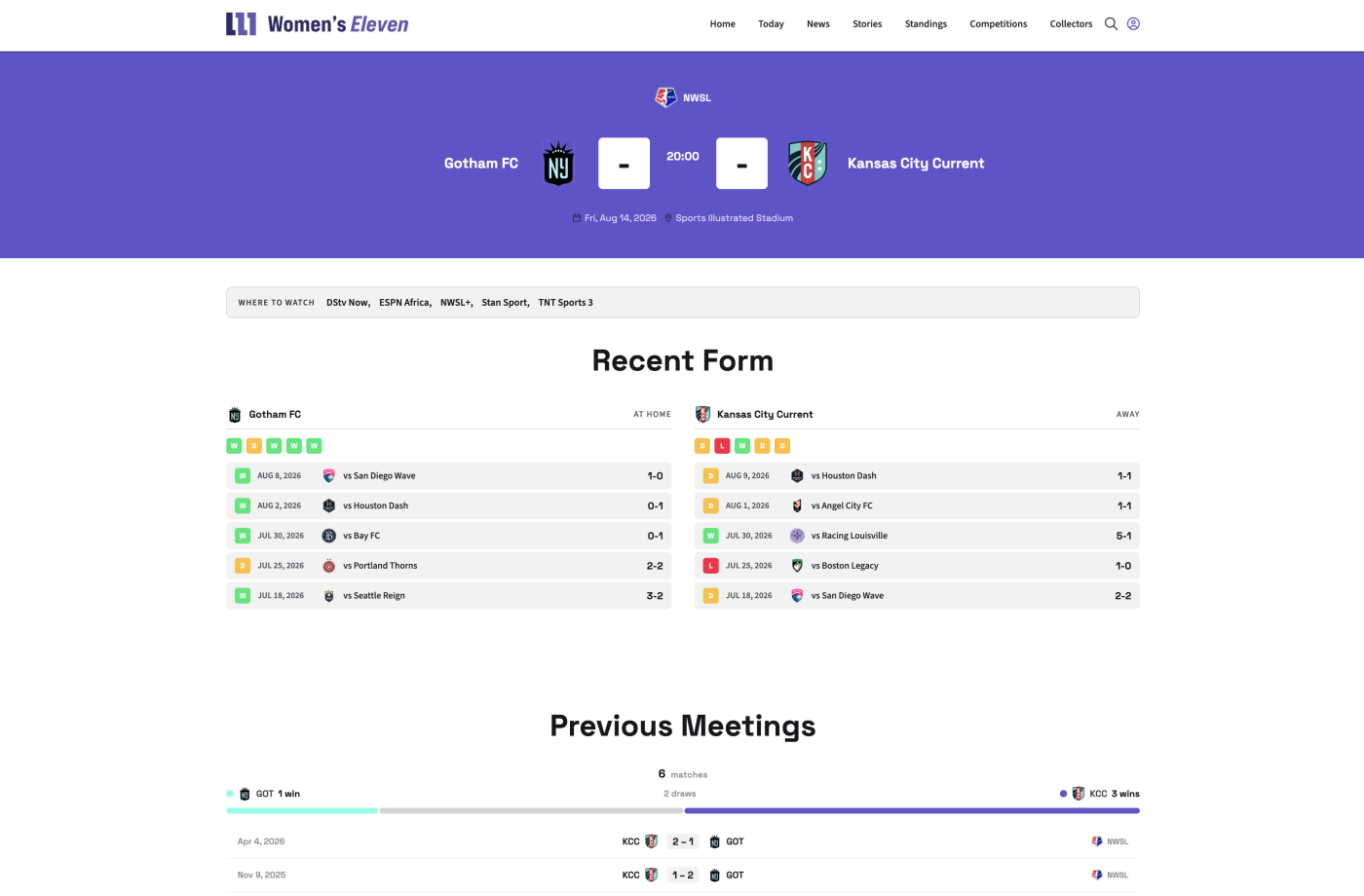
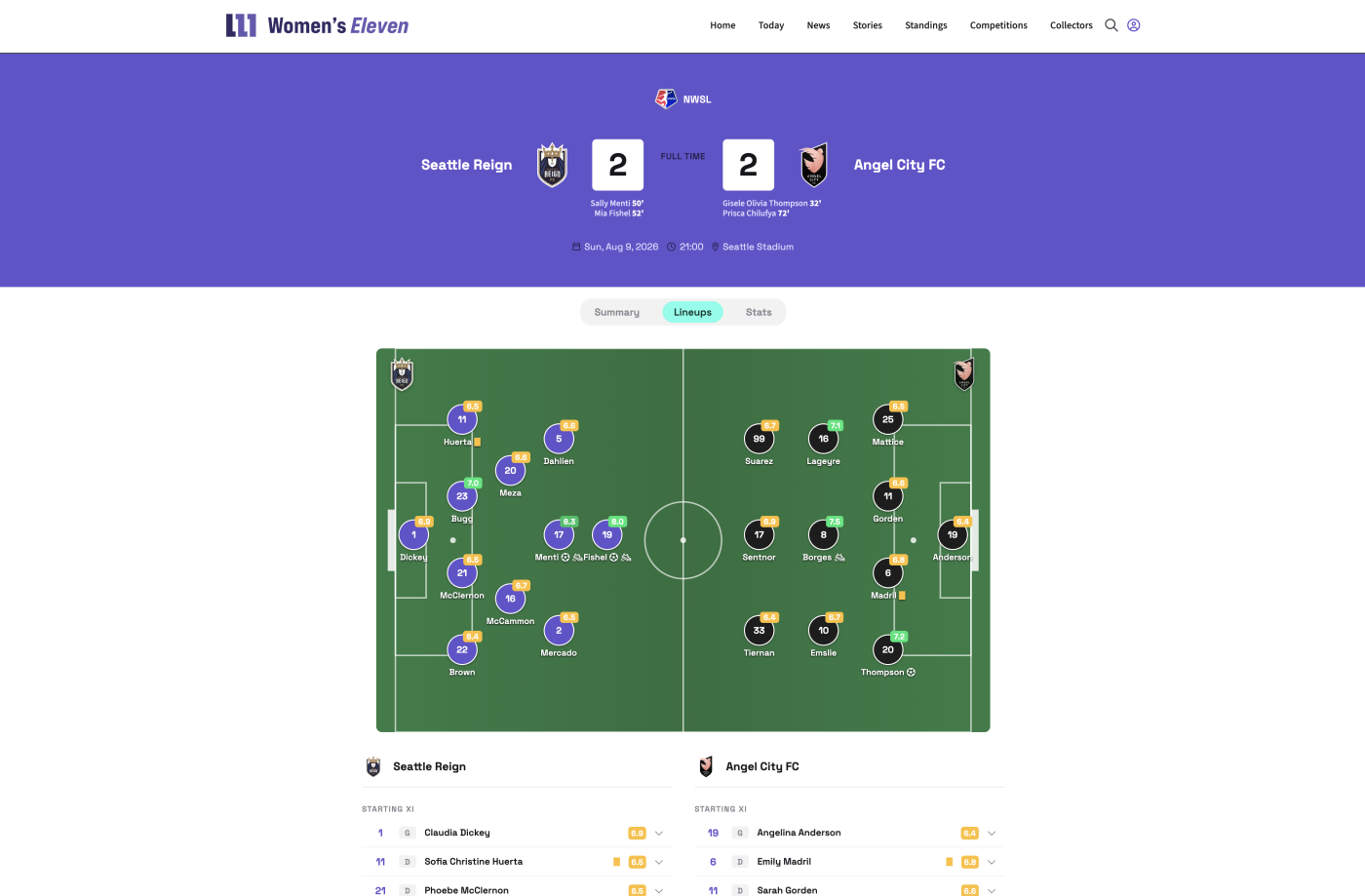
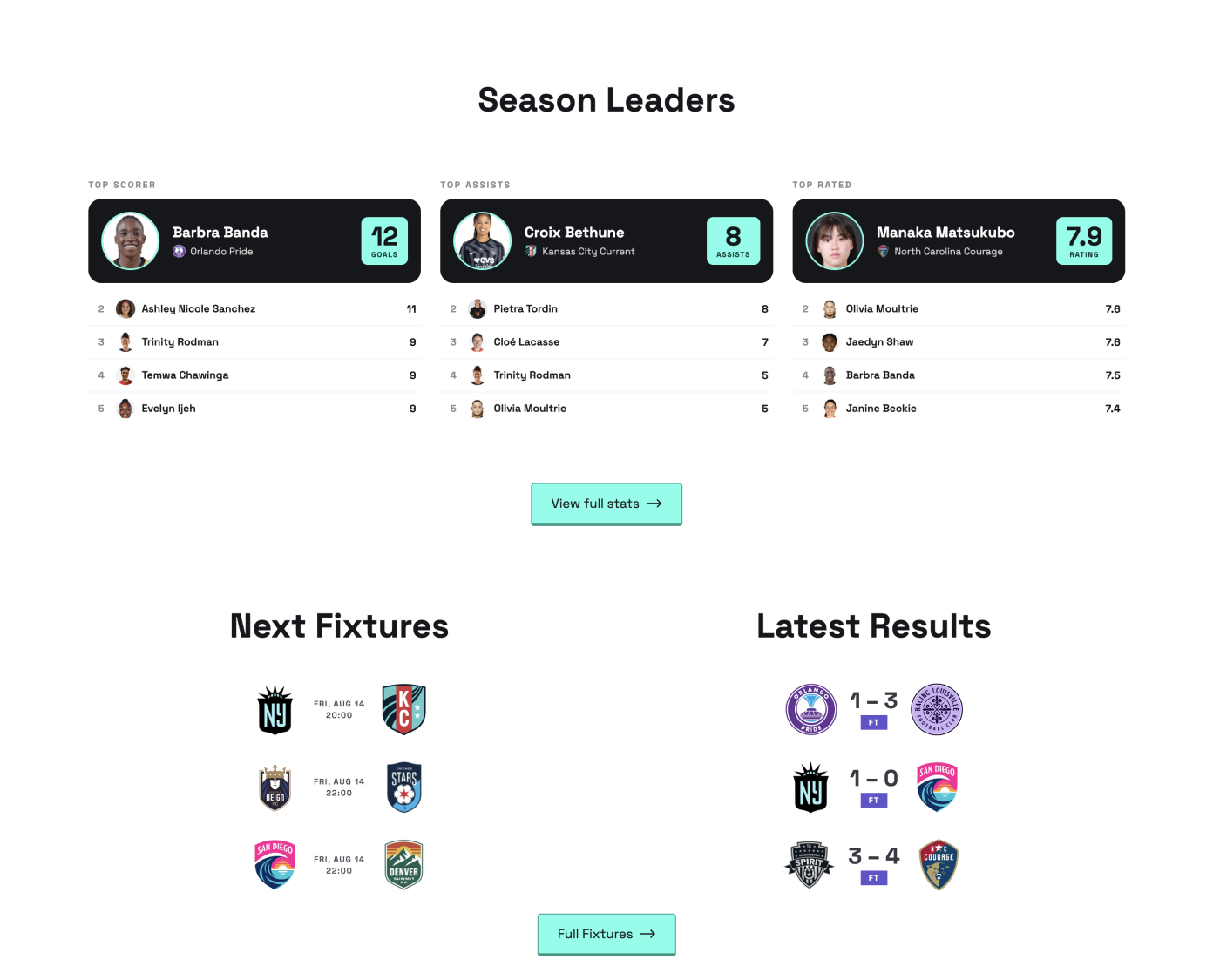
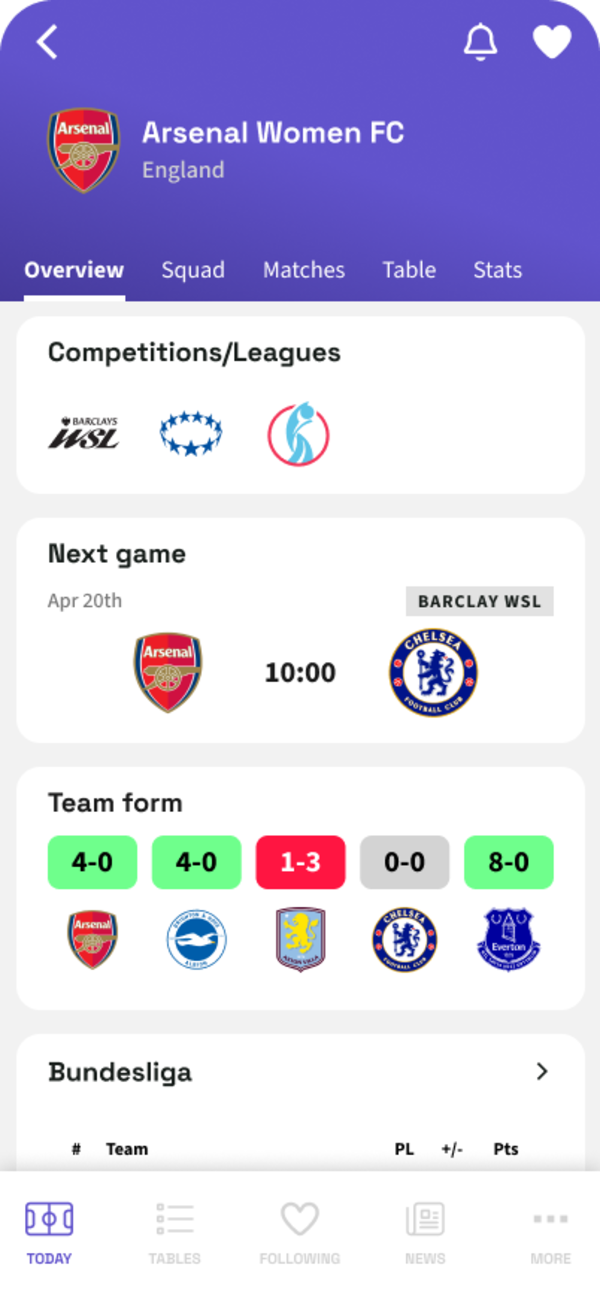
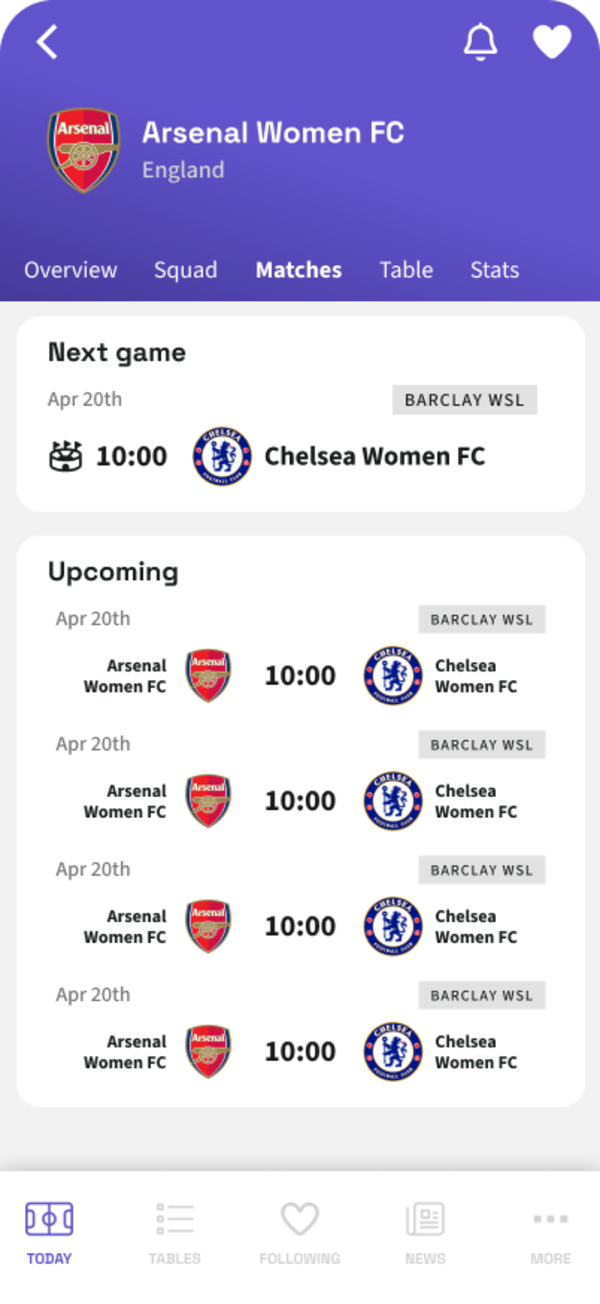
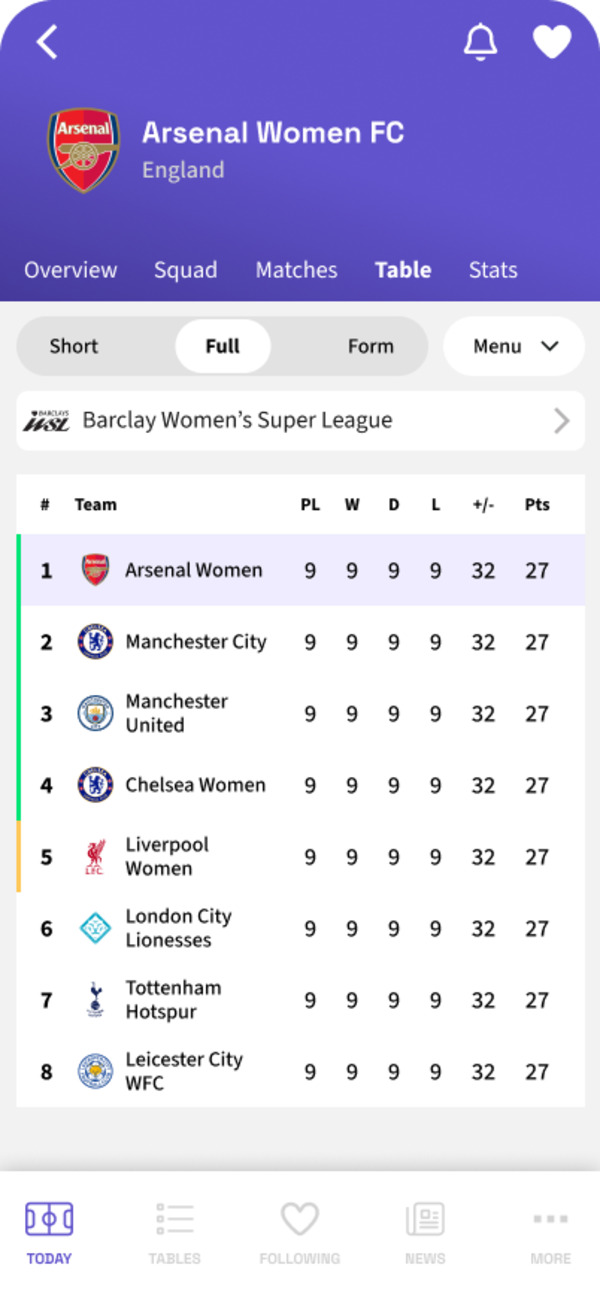
- A curated data layer – Synced a commercial sports feed into the database, then put a curated overlay on top so I decide which competitions are published, how they are named, and how they are ordered. The provider supplies the data; the product decides the editorial shape.
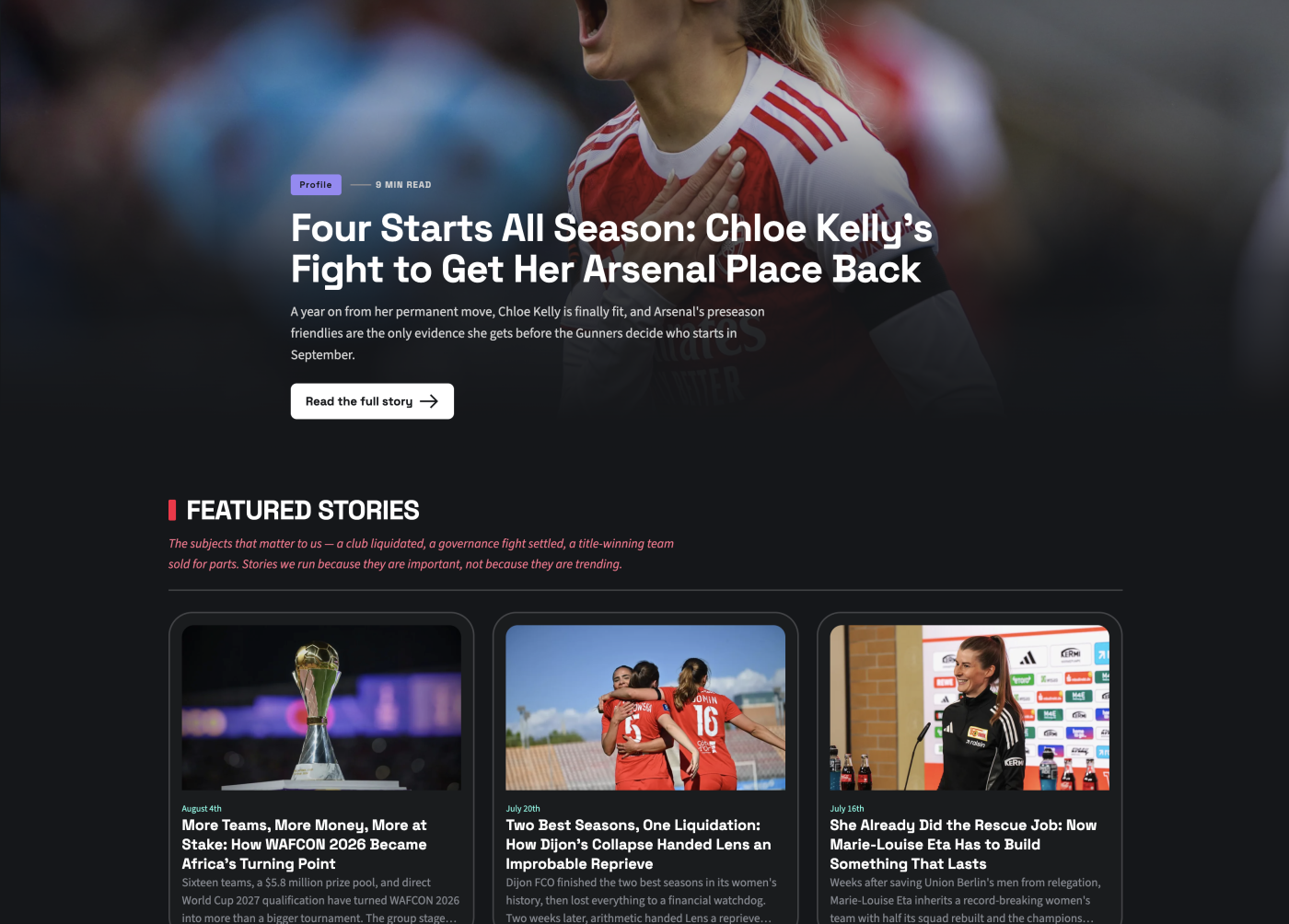
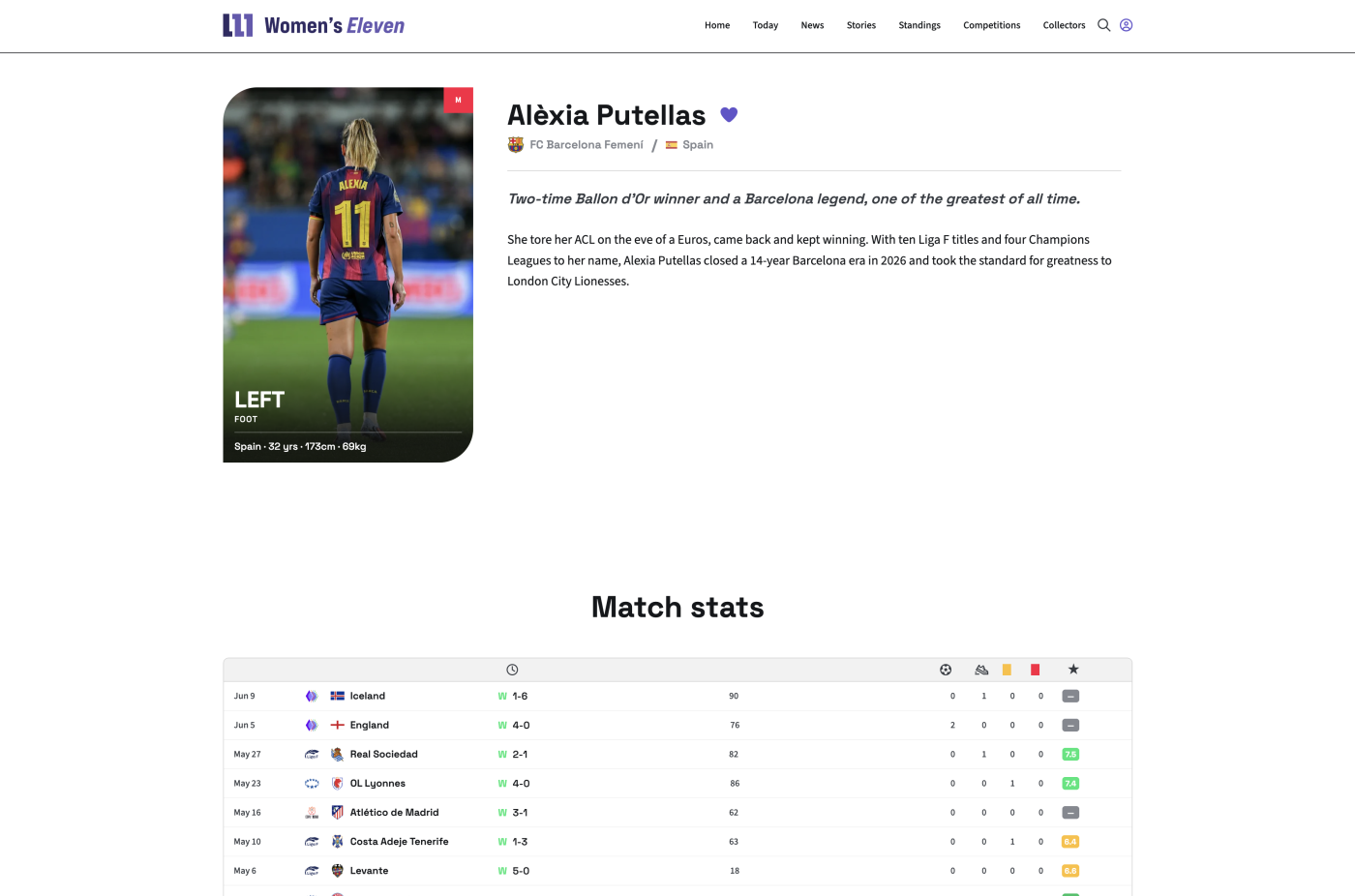
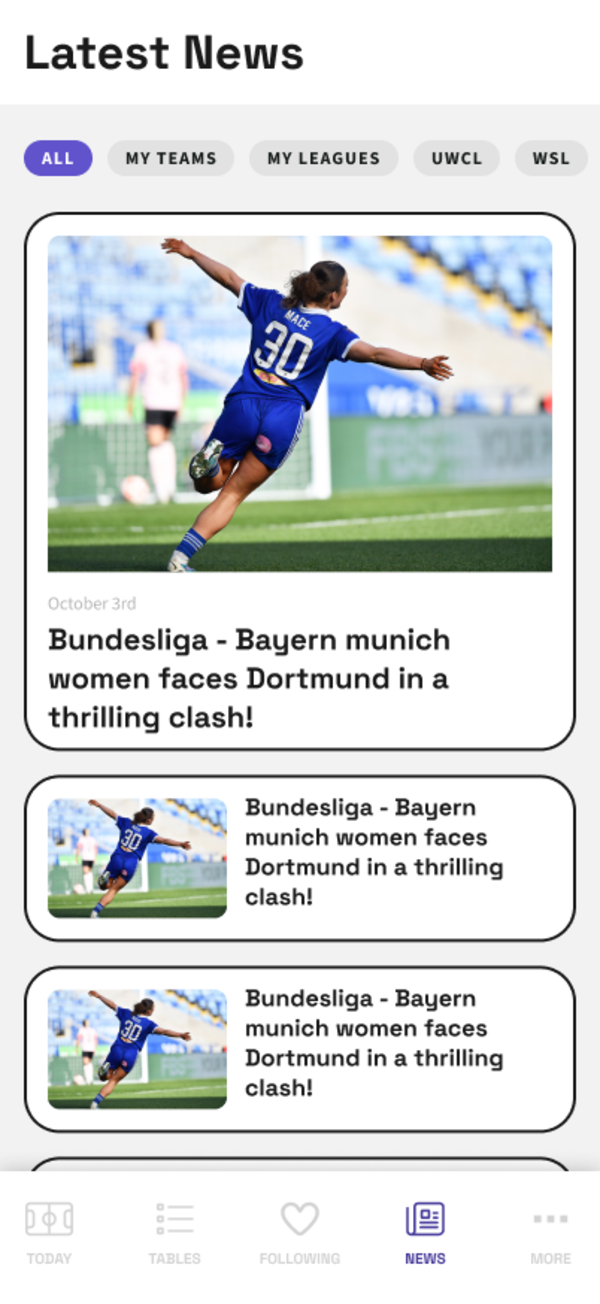
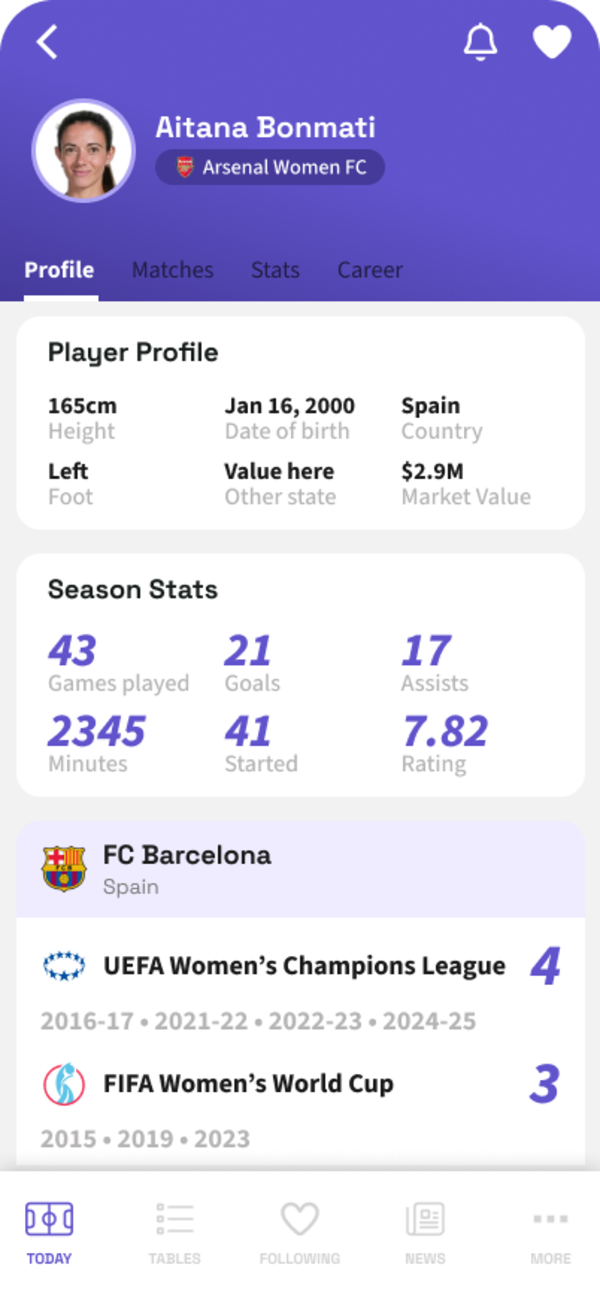
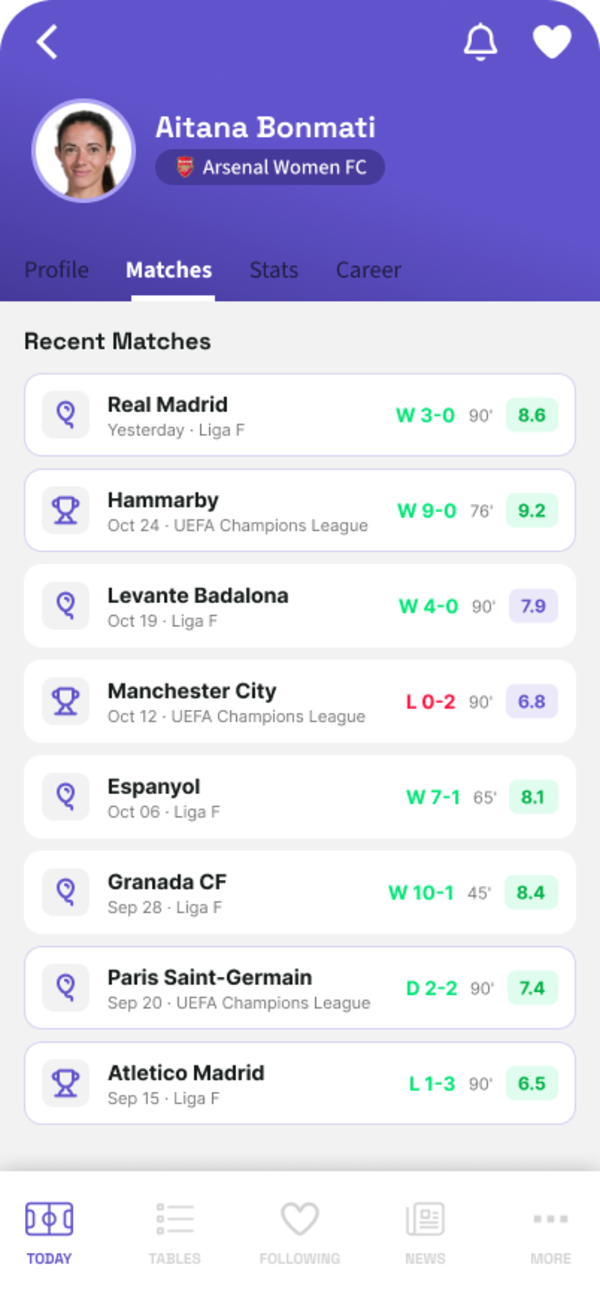
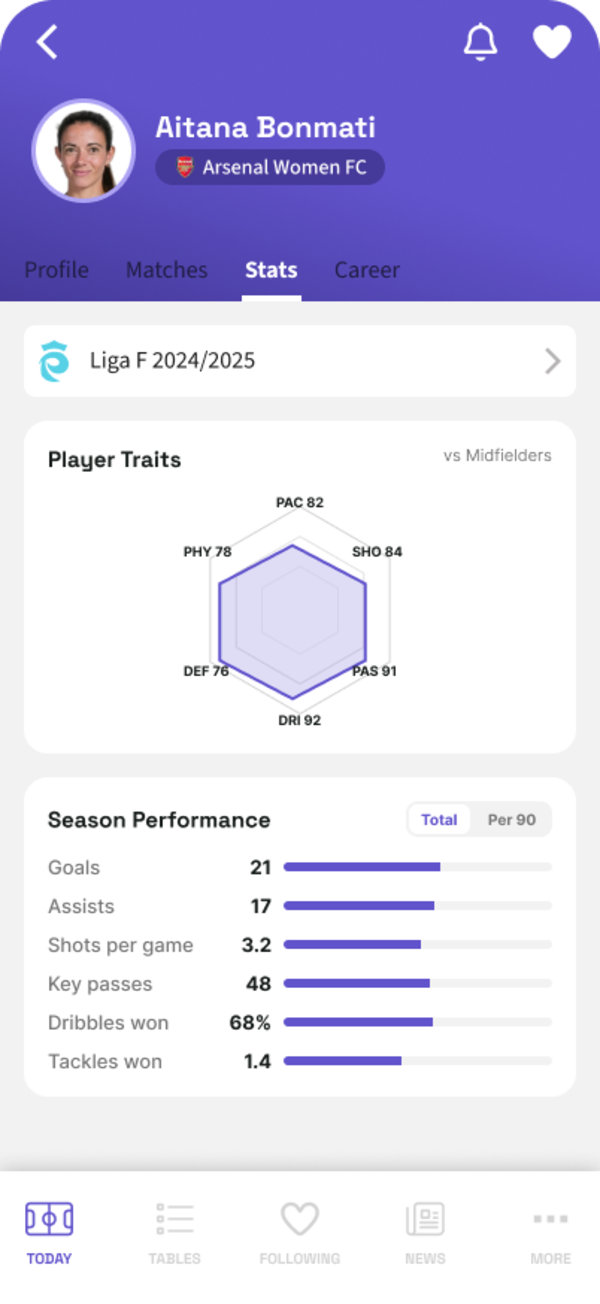
- Editorial surface – Designed the homepage around the story first, with fixtures, transfer coverage and player profiles arranged so the site reads like a publication rather than a database.
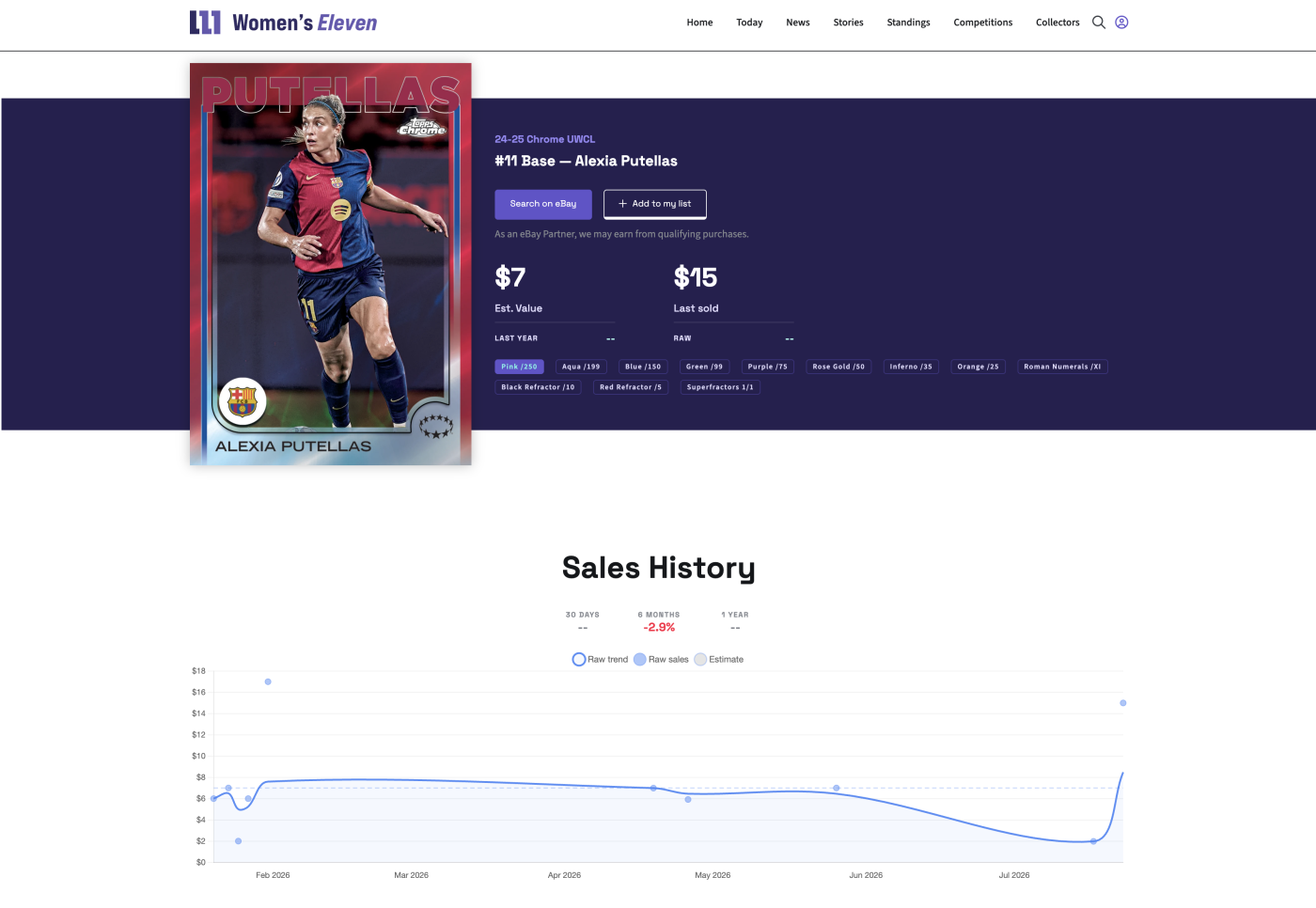
- Card Value Tracker – Designed and built a tool that browses trading-card sets and estimates values from recent eBay sales, giving collectors something no general sports site offers.
- API first, then the app – Built a versioned REST API with authentication, caching and rate limiting so the iOS app consumes exactly the same data as the website, with one source of truth behind both.
- Accounts and subscriptions – Designed the sign-in, favourites and subscription flow, and built the entitlement layer behind it, so the commercial model is in place and ready for the point where the audience justifies switching it on.
- Ship safely, alone – Set up staging, a checks gate that lints every file and compiles every template before anything deploys, and automated releases, because there is no second pair of eyes.
Visuals
Outcome
competitions covered, from domestic leagues to World Cups
public website, iOS app and admin, on one API
design, front-end, back-end, data and mobile
- A live product shipping continuously since 2025, with staging and automated deploys.
- Editorial, live data and the card tracker running on a single design system and a single API.
- An iOS app in beta, built on the same data as the website rather than a parallel implementation.
What made this different
Client work ends at handoff. This does not. Every decision here is one I have to live with: the component I named badly is still badly named a year later, the data model I rushed is the one I now work around. Owning a product end to end has made me a sharper designer, because I feel the cost of design decisions in maintenance, in performance and in my own time. It is also the clearest proof I can offer that I understand what happens to a design after the file is handed over.